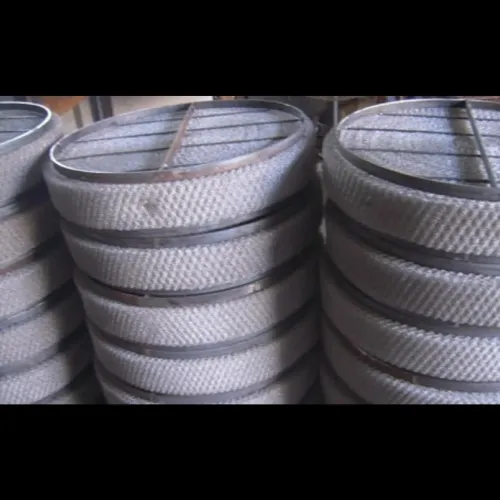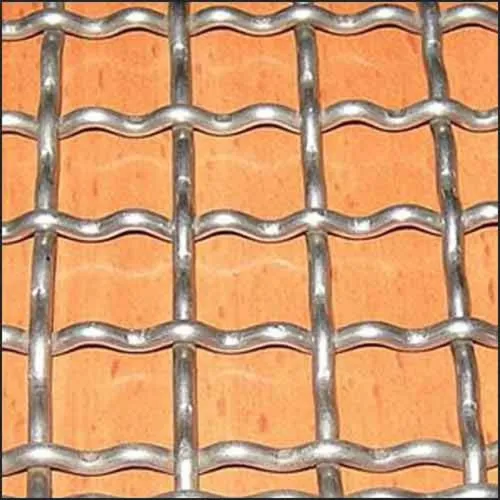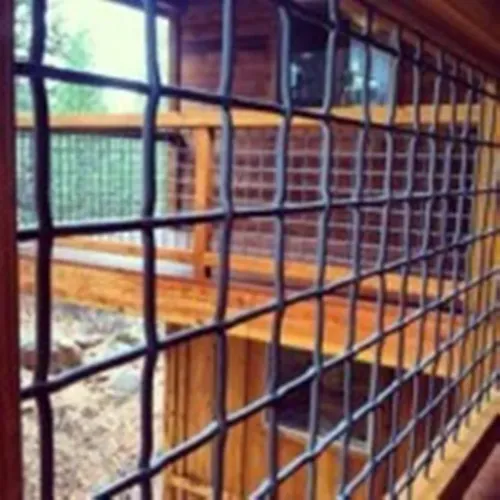


A screening panel can lose capacity or fail early when its aperture, support system and material do not match the feed. By the end, you will be able to choose the opening, compare panel types, specify the installation and check whether a panel is suited to Doha’s heat, humidity, salt exposure and plant conditions.
Key takeaways
- Match aperture size to the feed size and required cut size.
- Support panels evenly to prevent vibration damage and premature wire breakage.
- Specify wire material, crimp pattern, dimensions and tension method in writing.
- Choose corrosion resistance and wear life for Doha’s heat, dust and service conditions.
Where crimped panels improve plant screening
Crimped panels improve plant screening by holding a consistent aperture under impact, load and vibration. Screening panels for processing plants use this stability for:
- Scalping large lumps before crushing
- Sizing aggregate, sand or ore
- Separating oversize material
- Guarding chutes and transfer points
- Screening crushed rock
- Retaining bulk solids in hoppers or bins
Pre-crimped wires interlock, so the panel flexes less than a loosely supported surface. Impact spreads across several woven wires instead of concentrating at one unsupported span, producing steadier separation and fewer sudden changes in opening size.
Construction changes the balance between rigidity, open area and blinding:
| Construction | Rigidity | Open area and blinding behaviour |
|---|---|---|
| Lock-crimp | High; resists aperture movement under load | Stable openings, with reduced open area when heavier wire is used |
| Intermediate-crimp | Balanced rigidity and flexibility | Practical general-purpose choice; moderate blinding risk |
| Flat-top | Smooth upper surface reduces ledges that trap material | Can reduce blinding, while its open area depends strongly on wire diameter |
| Double-crimp | Strong aperture retention and deck stability | Suits impact service, but tighter wire arrangements can reduce open area |
Do not use one panel across the entire deck when feed conditions vary. Wear concentrates where material first strikes and where the panel bears on supports. Use heavier wire or a sacrificial section at the feed-impact zone, then specify a finer or more open section downstream to preserve capacity and separation.
How to match the opening to the feed and cut size
Do not order a panel by “13 mm mesh” alone. State the nominal aperture, clear-opening method, wire diameter and pitch separately: aperture is the gap, pitch is aperture plus wire diameter, and retained particle size is the material that remains on the deck—not the gap measurement.
For a square opening, open area is approximately (aperture ÷ pitch)². A 13 mm opening with 3 mm wire has a 16 mm pitch and about 66% open area; a 13 mm opening with 2 mm wire has about 74% open area. The thicker panel carries impact better, but restricts flow and changes load capacity.
The 13 mm × 13 mm opening with 3 mm wire is a specification, not a universal recommendation.
| Choice | Benefit | Risk |
|---|---|---|
| Smaller opening | Retains smaller oversize | Lower open area and greater blinding |
| Larger opening | More passage area | Unwanted oversize can pass |
| Thicker wire | Greater impact and wear resistance | Lower throughput, even with a larger aperture |
Select the opening against the actual feed, not the target cut alone. Check:
- Maximum lump size and feed rate
- Moisture, clay and stickiness
- Abrasiveness and temperature
- Target cut and acceptable oversize
Wet clay and damp fines can blind a suitable aperture. For a purchase brief for crimped wire mesh for panel in Doha, record each dimension and feed condition so a visually similar replacement does not alter separation.
Install, support and replace panels without creating failure points
A panel performs only as well as the deck beneath it. Install continuous support bars, or space them closely enough to prevent the active mesh area from sagging, then restrain every edge without clamping unsupported mesh.
1. Confirm the panel orientation before lifting it into place. Keep the crimp and hooked edge aligned with the frame design, seat flat bolted edges evenly, and use clamps or hooked-edge retainers that distribute load across supported areas. Clamping a gap between support bars creates a stress point and can break crimps or wires.
2. Reinforce the feed-impact zone. Abrasive rock, ore, sand and aggregate wear the entry area and support contact points first, so use a heavier-wire or sacrificial section at the feed end, followed by a finer or more open section downstream.
3. Fit access doors and removable panel sections into the deck. Operators can then inspect blinding, fretting, loose crimps and wire breaks, and replace a damaged section without dismantling the full screen.
4. Replace panels by matching width, length, aperture, wire diameter, crimp type, edge configuration and support spacing. A visually similar panel can change capacity, cut-point behaviour and service life.
5. For industrial mesh panels in Doha, provide drainage and thermal-movement allowance in outdoor steel frames. Slotted holes or suitable clamps accommodate expansion; excessive looseness causes impact noise and fretting, while rigid fastening transfers frame distortion into the mesh.
Choose the panel material and screen type for Doha service
Square crimped mesh is not automatically the best Doha screen. Choose by feed impact, target opening, wash-down practice and replacement access; crimped wire mesh panels in Qatar face humidity, saline air and trapped water that can shorten service life.
| Option | Open area and blinding | Impact, noise and wear | Replacement and moisture |
|---|---|---|---|
| Square crimped mesh | High open area; aperture can blind with sticky feed | Distributes impact across wires; moderate noise and wear | Usually quick to replace; needs drainage |
| Welded mesh | Lower flexibility; openings can distort at welds | Rigid, but welds can crack under impact; moderate noise | Simple panels; inspect welds and trapped wash water |
| Perforated plate | Lower open area for equivalent strength | Highest impact resistance; louder and heavier | Slowest handling; holes can blind with wet fines |
| Polyurethane panels | Lower open area in some designs; good release from sticky feed | Low noise and strong abrasion resistance | Longer wear in suitable duties; cleaning and fitting take planning |
| Woven vibrating-screen media | High throughput with flexible wire selection | Good separation; wire wear concentrates at feed impact and supports | Replace sections rather than whole decks; requires firm support |
Separate the material decision from the screen type. Carbon steel suits dry, non-corrosive service; galvanized wire adds a finite zinc barrier that cutting, abrasion and acidic or alkaline residues consume. Ask whether galvanizing occurred before or after forming.
For humid or saline service, 316/316L resists chloride pitting better than 304/304L, but neither is immune in deposits, crevices or stagnant wash water. Clean and drain panels, avoid trapped water, and use isolating washers between dissimilar metals. Specify hygiene, lubricant residue, welds, edge treatment and the required service-temperature range for food or chemical duty.
Write a specification that preserves screening performance
A visually similar panel can change the cut point, throughput and service life. Put these items on the purchase order and acceptance record:
1. State panel length and width, nominal aperture, clear-opening method, wire diameter, pitch, crimp type, material grade, finish, edge configuration, flatness limit and dimensional tolerances. Record the support-bar spacing and clamp or bolt arrangement, plus the intended feed, particle size, moisture and abrasive content.
2. Require ISO 9044 for industrial woven wire cloth requirements and tests. Use ASTM E11 when the application uses test-sieve cloth terminology. For a coarse panel made to a purchaser drawing, reproduce the drawing’s aperture, wire diameter, pitch, flatness and tolerances on the order.
3. Before installation, measure apertures with a recognized gauge or calibrated method rather than judging them by eye. Check wire diameter, length, width, flatness, edge condition, damaged coating, loose crimps and every contact point with the supports.
4. Reject panels that cannot sit flat, have distorted edges, expose damaged galvanized areas, or allow clamps to bear on unsupported mesh. Match the replacement to the existing support spacing and edge restraint.
5. Inspect the deck at a scheduled interval for blinding, corrosion, fretting at supports and feed-end wear. Increase inspection frequency after wet, saline, abrasive or impact-heavy service.
Laktas Wire Mesh Pvt.Ltd. Mr. Pramod K. can help convert a plant drawing and feed conditions into these checkable values, preventing a visually similar replacement from entering service.
Related products
 | We are second largest wire mesh manufacturer and exporter in India. Crimp wire mesh made by pre-crimped wire and then weaved. View product → |
 | Wire Mesh MOC : GI OPENING : 13X 13 MM WIRE DIA : 3 MM SIZE : 1150 MM X 3000 MM View product → |
Frequently asked questions
Where do crimped wire mesh panels improve plant screening?
They suit processing plants where impact, vibration and material load can distort weaker screening surfaces. Stable apertures help maintain separation performance across the panel.
How do you match the opening to the feed and cut size?
Start with the target cut size, then check the feed’s top size, moisture, shape and abrasiveness. Confirm the opening type and effective aperture rather than specifying nominal mesh count alone.
How should you install and support crimped screening panels?
Use the specified support bars, clamps or tensioning system across the panel. Remove sharp contact points, prevent unsupported spans and keep replacement panels aligned with the original aperture direction.
Which panel material and screen type suit Doha service?
Select carbon steel, galvanised steel or stainless steel according to abrasion, corrosion, temperature and cleaning requirements. Compare woven, welded and crimped constructions against the load and screening duty.
What should a crimped panel specification include?
State wire material and diameter, aperture shape and size, crimp pattern, panel dimensions, edge finish, support method, screening direction and operating conditions.
Related products
 | With Commitment To Quality And Excellence, Specializing In Projects, We Work Closely With Our Customers To Meet Their Exact Requirements. View product → |
 | Wire Mesh SS310 CRIMPED WIRE MESH Crimped Wire Mesh Laktas Wire Mesh's crimped wire mesh is a premium quality wire mesh product, expertly crafted to provide exceptional strength,... |