
Choosing a food-processing mesh requires more than naming SS 304 or SS 316: aperture, wire diameter, weave, fabrication and cleaning history all affect performance and hygiene. By the end, you will be able to compare grades, select a measurable specification, identify suitable mesh constructions and request the documents needed before approving a purchase.
Key takeaways
- Choose SS 304 for dry service; use SS 316 for chlorides, brine, acids or coastal exposure.
- Specify the actual opening in millimetres, not mesh count alone.
- Select plain, twill or Dutch weave according to screening and filtration loads.
- Demand smooth welds, clean edges, traceability and a documented inspection before acceptance.
Choose SS 304 or SS 316 from the exposure conditions
SS 304 is adequate for dry foods, bakery lines, flour sifting, grain grading, packaging contact and routine food-contact service in Satara. Choose SS 316 when the mesh faces chloride-bearing wash water, brine, salt, acidic products, acidic cleaning chemicals or coastal-storage exposure.
SS 316 is not automatically better for every food application; it costs more without solving a problem that SS 304 does not have.
| Grade | Handles well | Choose it when |
|---|---|---|
| SS 304 | Dry food, bakery, flour, grains, general contact and ordinary washdown | Chloride exposure is low and the mesh is cleaned with a controlled, non-aggressive process |
| SS 316 | Chlorides, salt, brine, acidic residues and harsher chemical cleaning | Pitting risk threatens service life, hygiene or product contamination |
| Either grade | Food-contact assemblies | The required surface finish, weld quality, passivation and documentation are confirmed |
Do not accept “SS 304 mesh” as a complete specification. Ask an SS 304 wire mesh supplier for:
- Grade confirmation, heat or lot traceability, chemical composition and a material test certificate.
- The aperture and tolerance, wire diameter, mesh count, weave, width, length and edge treatment; changing wire diameter changes open area, pressure drop and belt strength.
- Aperture measurements at multiple locations, broken-wire and burr inspection, squareness checks, and ferrous-contamination testing when the product demands it.
For export, check the destination market’s food-contact rules, including Regulation (EC) No. 1935/2004 where applicable.
Specify the opening, not only the mesh count
A 150 µm cut point does not automatically mean 150 mesh. For square woven cloth, estimate clear aperture in millimetres as 25.4 divided by mesh count, minus wire diameter. Thus, 100 mesh using 0.10 mm wire gives about 0.154 mm, or 154 µm, before tolerance and process effects.
Treat “micron rating” carefully. A woven screen has a geometric opening; a filter supplier’s nominal or absolute rating describes particle retention under defined conditions. Particle shape, orientation, blinding and cake formation can change actual separation, so confirm the required aperture with a sieve test or process trial.
Throughput determines more than the cut point. Larger open area reduces pressure drop but can weaken the cloth; finer wire increases open area at the same count but reduces strength. State these items in the purchase specification:
- Target aperture in micrometres, with tolerance, plus mesh count as a cross-check
- Wire diameter, stainless grade and recognized weave designation
- Required open area, feed rate, screen width and usable length
- Operating pressure or loading rate, temperature and cleaning method
- Edge treatment, dimensional tolerance and inspection method
Use ISO 9044 for woven wire-cloth requirements and tests, and ISO 4783 when selecting wire diameter and opening combinations. For stainless steel filtration mesh in Satara, require aperture measurements at several locations, wire-diameter checks and a visual inspection for broken wires and burrs; add ferrous-contamination testing when the product is sensitive.
Match the weave and construction to the process
A food processing wire mesh India specification must name the construction, not just “stainless steel mesh.” The wrong weave can blind during sifting, create excessive pressure drop in filtration, or fail under belt tension and repeated thermal cycling.
| Application | Suitable construction | Why it fits |
|---|---|---|
| Sifting and grading | Plain square weave | Gives a consistent geometric opening for dry powders, flour, grains and spices; specify wire diameter with the aperture. |
| Liquid and oil filtration | Plain weave for coarse duty; twill or Dutch weave for finer retention | Twill increases wire support, while Dutch weave provides tighter openings; state whether the rating is nominal or absolute. |
| Conveying | Balanced weave, compound balanced weave, rod-reinforced or chain-edge mesh | These constructions address tracking, flexibility, load, sprocket engagement and belt tension better than fine filter cloth. |
| Thermal processing | Balanced or compound balanced weave with reinforced edges | Open area supports airflow, while robust joints and edges tolerate heating, cooling and product loading. |
Do not replace a belt with filtration cloth simply because both show the same aperture. A fine mesh can stretch, buckle, or clog when exposed to sprockets, tension and wet product.
For dry screening, compare open area as well as cut size. For filtration, define the test method and particle material. For ovens, dryers and fryers, state operating temperature, belt speed, loading and cleaning method; those details determine whether the construction survives.
Treat food-contact hygiene as a fabrication requirement
A food-contact mesh can fail hygienically even when its alloy is correct. Rough welds, burrs, wire ends, heat tint, embedded iron and closed crevices trap product and resist cleaning. Inspect the wire, welds, frame and edges separately; woven crossings and interstices cannot be represented by a sheet-metal surface-finish value alone.
Ask for these fabrication and release checks:
- A smooth, clean wire surface with no broken wires, burrs, sharp ends or visible contamination; state the finish and inspection method for each exposed component.
- Welds with smooth transitions, no spatter, cracks, pinholes or inaccessible pockets, especially at frames, screen packs and belt edges.
- Edges that are folded, trimmed or capped without exposed wire ends, rolled burrs or product-trapping gaps.
- A recorded passivation process, lot or heat reference, and confirmation that heat tint and free-iron contamination were removed.
- Material test certificates stating SS 304 or SS 316, chemical composition and traceability, plus aperture or mesh inspection results.
Your specification for SS 316 wire mesh in Satara should also require welding and passivation records where those operations apply. For export shipments, ask whether the completed article supports destination-market rules, including Regulation (EC) No. 1935/2004 for EU food-contact use. A grade certificate alone cannot prove cleanable fabrication.
Build a purchase specification and inspect the delivery
Put the acceptance criteria on the purchase order, not in a phone call. “SS 304 mesh” alone leaves the opening, strength and fabrication open to interpretation.
- State the grade, weave, mesh count, clear aperture in millimetres, aperture tolerance and wire diameter. For square woven mesh, check that the stated aperture agrees with 25.4 divided by mesh count, minus wire diameter.
- State the finished width, length or cut size, quantity, roll or panel form, and edge treatment. Specify whether edges are trimmed, folded, framed or welded, and name the required finish for wire, welds, frame and edges.
- Define inspection before dispatch: aperture readings at multiple locations, wire-diameter verification, squareness or diagonal check, and visual rejection of burrs, broken wires, loose joints and damaged edges.
- Require heat or lot traceability, a material test certificate with chemical composition, aperture or mesh inspection results, and records confirming welding and passivation. Add a ferrous-contamination test where magnetic particles could enter product.
On arrival, measure several openings across the centre and edges with a calibrated microscope or aperture gauge; one acceptable corner does not prove the roll. Measure wire diameter, compare diagonals, and inspect under good light for blocked openings, burrs, broken wires and weld spatter. Quarantine any mismatch before installation.
A stainless steel wire mesh supplier in Satara, including Laktas Wire Mesh Pvt.Ltd. Mr. Pramod K., should receive the drawing and acceptance tolerances, not merely a mesh-count description. Keep the certificate with the lot record so replacement mesh is technically equivalent, not just visually similar.
Related products
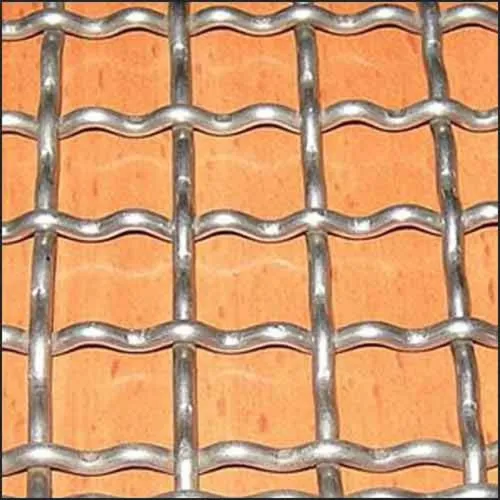
 | ₹6426 S S 316 Zigzag Wire mesh Weave Style: Crimped 13 Mm X 13 Mm Opening X 2mm Wire Dia Width 1420 Mm X 2375 Mm - 12 Nos. View product → |
 | ₹38000 500 Mesh Width 4ft X 25 Ft Ready Stock 100% Against Performa Invoice P&F + Freight + Gst 18% Extra View product → |
Frequently asked questions
When should you choose SS 304 or SS 316 wire mesh?
Use SS 304 for dry foods, bakery lines, flour, grains, packaging contact and routine food service. Choose SS 316 for chloride-bearing wash water, brine, salt, acidic products, acidic cleaners or coastal-storage exposure.
Why must you specify the opening instead of only the mesh count?
Mesh count does not define the complete separation performance because wire diameter changes the opening. State the required clear opening in millimetres, along with wire diameter or thickness.
Which wire-mesh weave suits food-processing equipment?
Use plain weave for general screening, twill weave for finer openings or greater wire support, and Dutch weave for filtration where retention and pressure resistance matter.
What hygiene details belong in a food-contact mesh specification?
Specify smooth, burr-free edges, clean welds, no crevices, suitable frame construction, material traceability and a finish that can be cleaned without trapping product.
What should you inspect when stainless steel mesh arrives?
Check the alloy certificate, opening size, wire diameter, dimensions, weave, weld quality, edge finish, surface cleanliness, quantity and packaging condition against the purchase specification.