
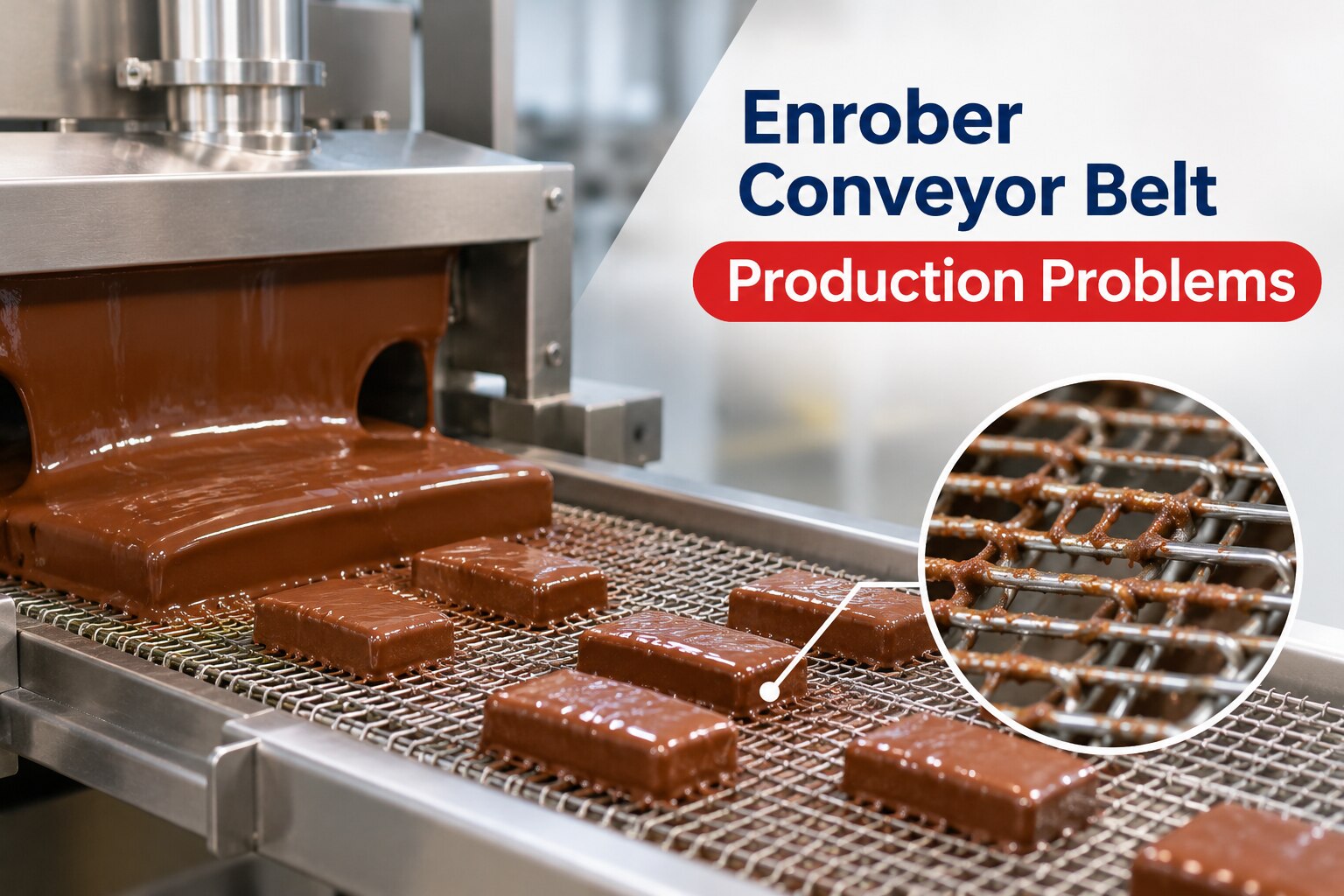
Chocolate buildup, coating streaks, belt drift, jerking and repeated wire or edge failures can come from the belt, the drive system, sanitation practice or the enrober settings around it. By the end, you will be able to separate belt faults from process faults, inspect the machine in the right order and specify a replacement that fits and runs correctly.
Key takeaways
- Track defects that repeat at the same belt position.
- Check coating temperature, flow, alignment and scraper settings before replacing the belt.
- Inspect sprockets, tension, guides and the belt underside in sequence.
- Verify tracking, hygiene and product performance before restarting production.
Match the production symptom to its likely cause
A repeating defect that follows the belt, appears at the same position each circuit, or changes when belt speed changes points to enrober conveyor belt problems rather than a random production fault. Inspect the entire circuit, including the return path, sprockets, tensioning devices and hidden underside areas.
| Symptom | Likely cause | Check first |
|---|---|---|
| Belt drifts or rubs one side | Unequal shaft alignment, mismatched sprockets, damaged edge links or buildup in sprocket teeth | Confirm drive and return shafts are square; inspect sprocket phasing and edge links |
| Belt slips, sags or elongates repeatedly | Excessive load, incorrect tension, seized sprockets or exhausted take-up travel | Check tension, take-up position, bearing condition and overloaded product rows |
| Belt jerks or runs unevenly | Hardened chocolate, crumbs or wash residue creating a local hard spot; bent cross-rods or shock loading | Rotate the belt slowly and inspect every joint, rod and return roller |
| Coating streaks or product marks repeat at belt pitch | Contaminated joints, damaged links, broken wires or belt lift | Compare the defect location with the belt surface and inspect scraper contact |
| Loud clicking, scraping or rattling | Cracked links, broken wires, worn sprocket teeth or a foreign object | Stop the conveyor and inspect sprockets, guards, bearings and the return path |
Do not cure drift by adding tension. Excess tension can damage bearings, sprockets and the belt while leaving a misaligned shaft untouched. Repeated broken rods or cracked links indicate a load, installation, temperature or transfer problem that must be corrected before fitting another belt.
Check the enrober process before blaming the belt
A coating defect is a process fault when it changes after adjusting chocolate temperature, flow or belt speed while the belt remains mechanically sound. Record the defect before making one change at a time; otherwise enrober belt troubleshooting becomes guesswork.
1. Measure chocolate temperature at the pump and curtain, then check viscosity at that temperature. High viscosity causes buildup and tails; low viscosity produces thin or uneven coverage. Compare readings with the approved recipe range.
2. Verify belt speed against the pump, curtain height and bottomer. A faster belt reduces drainage time and can create heavy bottoms; a slower belt can increase coating thickness. Recalibrate pump flow after any speed change.
3. Check curtain width, alignment and continuity across the product path. Gaps or an off-centre curtain create stripes and bare edges. Confirm feed spacing: overlapping pieces indicate excessive loading, while large gaps expose the belt to unnecessary chocolate.
4. Inspect vibration and scraper contact at the bottoming section. Insufficient vibration leaves excess chocolate underneath; excessive contact marks products or damages the belt.
5. Confirm cooling-air temperature, airflow and tunnel loading. Inadequate cooling leaves soft coating that transfers to the return path, while excessive cooling can set chocolate on the belt surface. Clean buildup before judging belt material.
Follow a mechanical troubleshooting sequence
Start with the belt circuit, not the tensioner. Lock out the conveyor and inspect both the carrying surface and return path; chocolate, crumbs or wash residue on sprocket teeth, rollers or take-up parts can create drift, hard spots, belt lift and noise.
1. Check for physical interference. Look for sag, seized support rollers, scraper contact, hardened chocolate in joints, bent cross-rods, broken wires and damaged edge links. A single obstruction can make an otherwise sound belt jerk.
2. Check alignment and drive parts. Confirm that the drive and return shafts are parallel, sprockets are matched and securely mounted, and sprocket teeth are neither worn nor packed with residue. Inspect bearings, couplings and the drive chain for looseness or seizure.
3. Check tension and take-up travel. Confirm that both sides have equal adjustment and that the belt has not reached the end of its take-up range. Do not cure drift by simply increasing tension; excessive tension accelerates sprocket, bearing and belt fatigue while leaving a shaft or edge-link fault untouched.
4. Run the conveyor empty at low speed after clearing the fault. Watch whether the belt tracks, slips or surges, and listen for repeating clicks or grinding. If the mechanics pass, continue enrober belt troubleshooting by checking chocolate temperature and viscosity, belt speed, curtain alignment, pump flow and cooling conditions before ordering a replacement.
Remove contamination without creating new belt damage
A stainless belt can still be damaged by chloride-bearing residue, excessive caustic, abrasive brushes and high-pressure spray. Match the sanitation chemical’s concentration and temperature to the belt and joint construction; rinse completely and dry before restart. Otherwise, trapped moisture or hardened chocolate in joints creates corrosion, belt lift and food conveyor belt problems.
- Do not aim high-pressure water at bearings, seals, sprocket hubs or electrical drives.
- Remove residue beneath the belt, not only from the product-carrying surface.
- Replace brushes that scratch welds or links, and never restart with pooled wash water.
Inspect the complete belt circuit, including guarded and inaccessible underside areas.
| Area | Inspect | Failure sign or action |
|---|---|---|
| Return path | Rollers, tensioning devices and underside | Chocolate or crumbs create hard spots, lift and tracking changes; clean before adjustment. |
| Joints | Welds, links, rods and splice surfaces | Cracks, broken wires or trapped residue require repair, not extra tension. |
| Bearings | Seals, free rotation and washdown damage | A seized bearing overloads the belt; isolate it before running. |
| Scrapers | Contact pressure, alignment and buildup | Excess pressure marks the belt; buildup redistributes chocolate. |
| Sprockets | Teeth, phasing, cleanliness and shaft alignment | Contamination or mismatch causes jerking, noise and premature belt damage. |
Choose a replacement that matches the whole conveyor
Do not order an enrober conveyor belt replacement by width alone. Match the belt to the conveyor’s drive, return path, product load, sanitation method and heat exposure, or a belt that physically fits can still drift, slip or damage its sprockets.
Send an enrober belt supplier in Mumbai this information:
- A dimensional drawing, belt length and width, plus photographs or a sample of the existing belt.
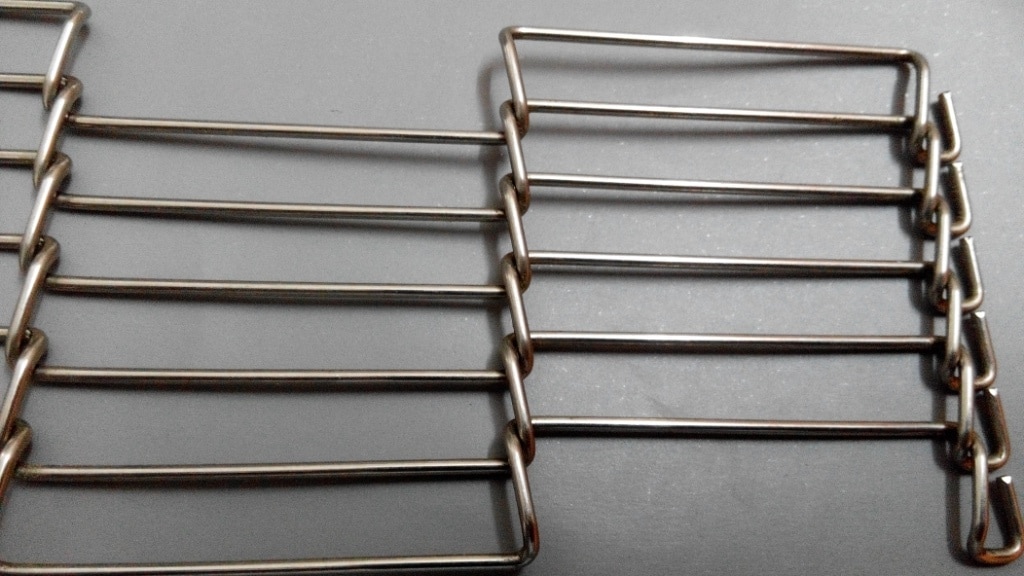
- Pitch, wire diameter, mesh pattern, open area, edge style, cross-rod and link material.
- Sprocket tooth form and count, belt travel direction, joint method and manufacturing tolerance.
- The chocolate-contact temperature, cooling conditions, product load, operating speed and cleaning chemicals.
- Material designation, surface finish, weld details, lubricant compatibility, food-contact declaration and confirmed lead time.
| Specification | Confirm before ordering | Why it matters |
|---|---|---|
| Belt geometry | Pitch, wire diameter, mesh type, width, length and open area | Wrong pitch or edge geometry prevents reliable sprocket engagement |
| Drive interface | Sprocket profile, tooth count, edge construction and travel direction | An apparent fit can produce skipping, noise or belt drift |
| Materials and joint | Grade, cross-rod, link, weld or joint method and finish | Stainless steel alone does not prove food-contact suitability |
| Operating limits | Temperature, speed, load, cooling and sanitation concentration | Chlorides, caustic, trapped moisture and overload shorten belt life |
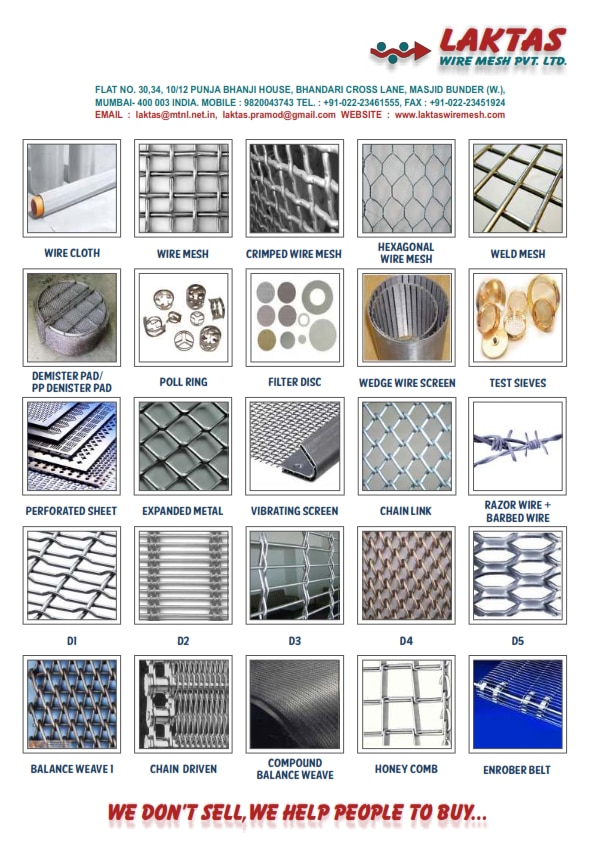
Laktas Wire Mesh Pvt.Ltd. Mr. Pramod K. should receive the same drawing and failure photographs as every competing supplier, so the replacement is matched to evidence rather than a generic “same as before” request.
Related products
 | ₹600 ENROBER CONVEYOR BELT APPLICATION Snacks Industries , Meat Industries Fish Industries , Candy Industries Pizzas Industries , Small Potatoes... View product → |
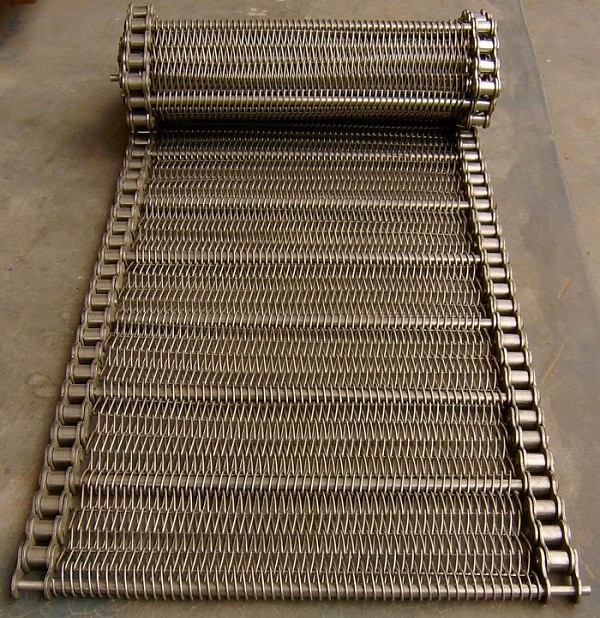 | ₹35000 also know as wire conveyor belt or wire mesh conveyor belt.There are so many types based on different material ,Our wire mesh conveyor belts and... View product → |
Install and verify the belt before returning to production
1. Inspect the enrober conveyor belt replacement before installation. Confirm the splice or joining method, joint alignment, cross-rod seating and edge-link condition; a forced or skewed joint will produce a repeating jerk and coating defect.
2. Install the belt in the marked travel direction. Verify the mesh engages the drive sprockets across the full width, with the correct tooth form, tooth count, pitch and edge geometry. A belt that fits the width can still ride incorrectly on incompatible sprockets.
3. Square the drive and idler shafts, then remove slack gradually through the take-up. Do not use heavy tension to correct drift: it can hide unequal shaft alignment and damage bearings, sprockets or links.
4. Run the conveyor empty at low speed for several complete circuits. Watch both edges, the return path and each joint, then recheck tension after the belt seats. Stop if tracking improves only under excessive tension; investigate shaft squareness, sprocket phasing or belt construction before loading product.
Frequently asked questions
How can you identify the likely cause of an enrober conveyor belt problem?
Match the symptom to its pattern. A defect that repeats at the same belt position points to belt damage or contamination, while changes with speed point to process settings, tension or tracking.
What should you check before blaming the enrober belt?
Check chocolate or coating temperature, viscosity, flow rate, curtain alignment, scraper clearance, cooling conditions and belt speed. These process faults can resemble food conveyor belt problems.
What is the correct sequence for enrober belt troubleshooting?
Stop and isolate the conveyor, inspect the belt and return path, check sprockets and guides, confirm tension and tracking, then examine the enrober settings before testing under controlled conditions.
How should you choose and verify an enrober conveyor belt replacement?
Match belt material, width, pitch, rod or link design, sprocket geometry, temperature range, cleaning method and product-contact requirements to the whole conveyor. Verify tracking, tension, cleanliness and coating performance before production.
Related products
 | ₹600 There Are Many Factors To Consider When Selecting The Right Bread And Biscuit Conveyor Belt. View product → |
 | ₹18000 Metal Conveyor Belt also know as wire conveyor belt or wire mesh conveyor belt.There are so many types based on different material ,Our wire mesh... View product → |
 | Laktas wire mesh Company offers many styles and specifications of conveyor belts to suit your specific application and improve your process... View product → |
 | Metal Conveyor Belts By Laktas Wire Mesh, We Have Been The Leading Metal Conveyor Belt Manufacturer For Over A Century. View product → |